
Selling a House With Foundation Problems: Repair It or Sell As-Is?
The short answer
You can sell a house with foundation problems either way — repaired or as-is — and the right choice depends on how structural the damage actually is. Minor, cosmetic settling cracks rarely change much. Real structural movement typically requires a structural engineer's report, limits which buyers can get financing, and triggers repair costs that can run from a few thousand dollars for minor stabilization to well over $20,000 for major foundation work. Many sellers in this situation net more, faster, by selling as-is to a cash buyer than by fronting the repair themselves.
"Foundation problems" covers a huge range, from a hairline crack that every house develops over decades to active structural movement that threatens the integrity of the building. The first job is figuring out which one you actually have, because that answer drives everything else — financing, price, and who's willing to buy.
Nothing here is legal or engineering advice, and repair costs vary significantly by region, soil type, and foundation design. A licensed structural engineer or foundation contractor should evaluate your specific house.
Cosmetic cracks vs. structural cracks
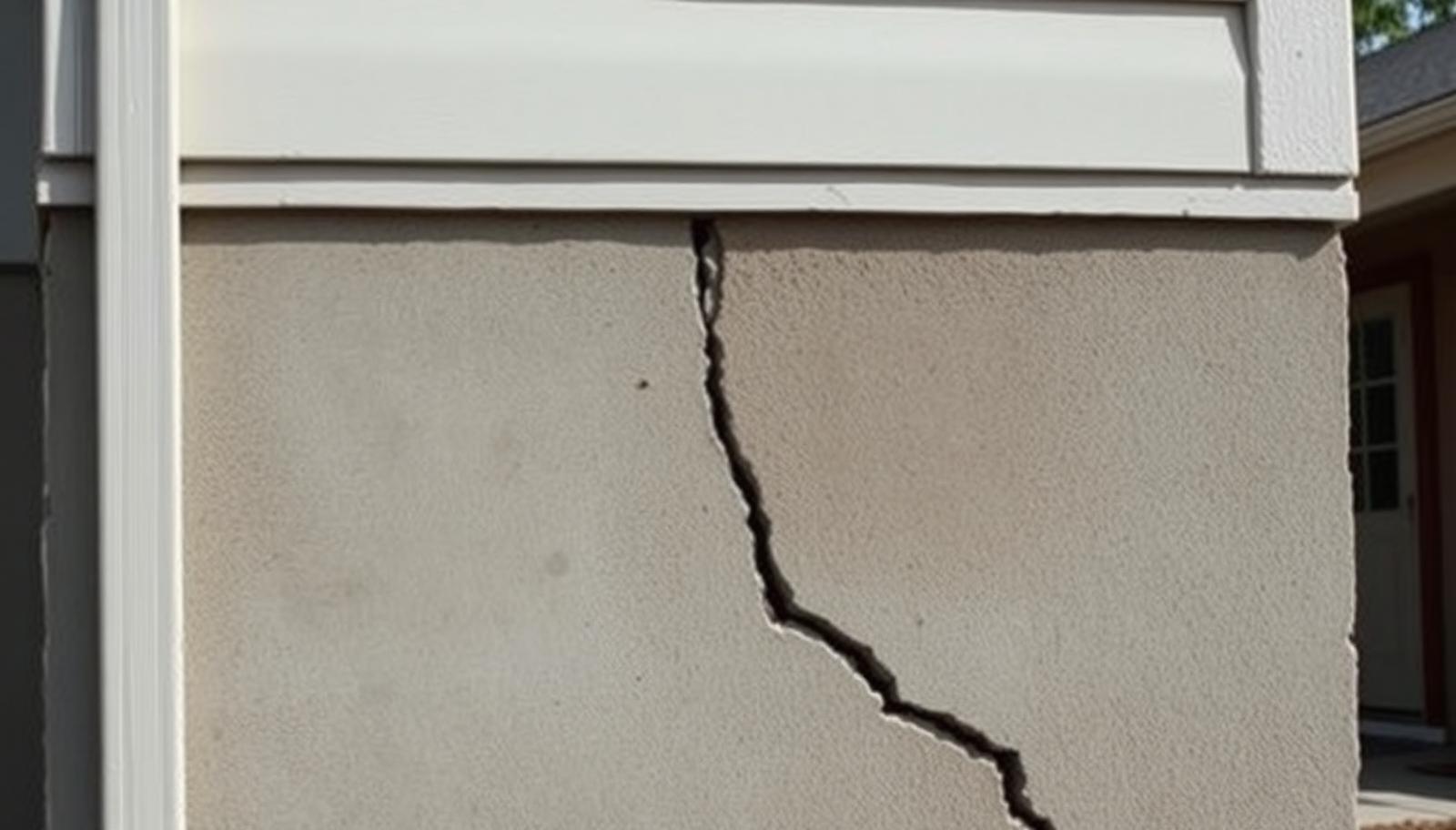
Not every crack means a foundation problem. General guidelines that engineers use, though every house should still be individually evaluated:
- Cosmetic (usually low concern): thin vertical hairline cracks in poured concrete, minor shrinkage cracks that appeared soon after construction, and small cracks that are consistent in width from top to bottom.
- Potentially structural (worth an engineer's look): horizontal cracks in a foundation wall, stair-step cracks in block or brick, cracks wider than roughly a quarter inch, cracks that are wider at one end than the other, and any crack paired with doors or windows that stick, sloping floors, or separating trim.
How do I know if my foundation crack is serious?
You generally can't tell for certain just by looking — width, shape, location, and what else is happening around it (door alignment, floor level, wall bowing) all matter together, not individually. If you see any of the "potentially structural" signs above, or you're just not sure, a structural engineer's evaluation is a relatively small cost that gives you a real answer instead of a guess.
Getting a structural engineer's report
A structural engineer's report is the single most useful document you can have when selling a house with foundation issues. It gives a buyer (and their lender) an independent, professional opinion on what's actually happening and what it will take to fix it, instead of leaving them to speculate. A report typically costs a few hundred to around a thousand dollars depending on your area and the size of the house, and it includes a diagnosis, a stability assessment, and often a specific repair recommendation.
Do I need an engineer's report to sell my house?
Not legally, in most cases, but practically, yes — most serious buyers and virtually all lenders will require or strongly prefer one once foundation issues are visible or disclosed. Having the report ready before you list, rather than scrambling for one mid-contract, keeps you in control of the timeline and the narrative.
Transferable warranties matter
If foundation repair has already been done — piering, wall anchors, slab jacking, or similar work — check whether the repair contractor issued a warranty and whether it's transferable to a new owner. A transferable, lifetime or long-term warranty from a reputable foundation repair company is one of the strongest selling points you can have, because it shifts the buyer's risk of future movement onto the warranty rather than onto them. If your warranty isn't transferable, ask the original contractor what it costs to transfer or reissue it — it's often inexpensive relative to the value it adds.
How foundation problems limit financing
Conventional, FHA, and VA loans all require the property to meet minimum safety and soundness standards, and an appraiser who spots signs of structural movement will typically flag the loan for further review — often requiring a structural engineer's report and, frequently, completed repairs before the loan can close. This is one of the main reasons foundation-affected houses take financed buyers longer to close, or fall out of contract altogether when the appraisal comes back with conditions the seller isn't willing or able to meet.
Can a buyer get an FHA or VA loan on a house with foundation problems?
It depends on severity. Minor, stabilized, and well-documented issues sometimes pass with conditions. Active structural movement or significant unrepaired damage usually has to be fixed before FHA or VA will fund the loan, since both programs are stricter than conventional financing about habitability and structural soundness.
Appraisal and insurance impact
Appraisers are required to note visible structural issues, and a report that flags foundation concerns can lower the appraised value or make the loan contingent on repairs — either way, it affects what a financed buyer can actually pay. On the insurance side, some homeowners insurers will decline to write a policy on a house with known, unrepaired structural damage, and a buyer generally can't close a financed purchase without insurance in place. That's a second, separate reason foundation problems narrow your buyer pool beyond just the financing question.
What foundation repair actually costs
Costs vary enormously by region, soil conditions, foundation type, and severity — these are rough ranges to help you think about scale, not a quote:
- Minor crack sealing or cosmetic repair — often a few hundred to around $2,000.
- Localized stabilization (a handful of piers, partial underpinning) — commonly in the $3,000–$10,000 range.
- Extensive underpinning or full perimeter pier systems — can run from roughly $10,000 to $30,000 or more depending on the number of piers and access.
- Major structural rebuilding (significant wall replacement, extensive slab work) — can exceed $30,000–$50,000 in severe cases.
Get at least two or three quotes from licensed, insured foundation repair companies, and confirm they carry a warranty program before assuming a number.
Negotiating credits instead of doing the repair
A common middle path is negotiating a price credit or closing-cost credit in lieu of completing repairs yourself, especially with cash or investor buyers who are comfortable taking on the work. This avoids the time and hassle of managing a foundation contractor before closing, but it generally only works with buyers who aren't relying on financing that requires the repair be done first — which is exactly why cash buyers end up being the practical option for a lot of these sales.
Curious what a credit-based, as-is sale would actually look like for your house? Get a no-obligation cash offer or book a call to talk through the numbers.
Disclosure obligations
Nearly every state requires disclosing known material defects, including known foundation or structural issues, past repairs, and any engineer's reports you've had done. Trying to hide known structural problems is one of the most common sources of post-sale litigation in residential real estate — disclose what you know, and provide any reports or repair documentation you have. It protects you and it also reassures buyers that nothing else is being held back.
Who buys a house with structural problems
- Cash and investor buyers — the most common buyer for houses with active, unrepaired structural issues; they typically factor the repair cost into their offer and handle the work themselves after closing.
- Conventional buyers — workable if repairs are completed or a lender-acceptable arrangement (escrow holdback, seller-completed repair) is in place before closing.
- FHA/VA buyers — generally the most restrictive; expect significant structural issues to be resolved before these loans will fund.
If you want to understand how a sale like this typically moves from offer to closing, see how our process works.
Questions sellers ask
Will foundation problems make my house unsellable?
No. Even significant structural damage has buyers — the pool is smaller and the price reflects the remaining repair cost, but houses with real foundation problems sell all the time, most often to cash or investor buyers.
Should I repair the foundation before listing, or sell as-is?
Compare your full repair cost (plus the time it takes to get quotes, schedule the work, and complete it) against the price gap between a repaired sale and an as-is sale. For minor, inexpensive fixes, repairing first often makes sense. For expensive or extensive work, many sellers net a comparable or better outcome, faster, by selling as-is and letting the price reflect the needed repair.
Does homeowners insurance cover foundation repair?
Usually not. Most standard homeowners policies exclude foundation damage from settling, soil movement, or normal wear, and only cover it if caused by a specific covered peril (like a burst pipe causing sudden soil erosion). Check your policy or ask your agent rather than assuming coverage.
Loyal Property Partners LLC buys houses nationwide with foundation and structural issues, as-is, with no repairs required from you and no fees. If a full inspection and repair process isn't something you want to take on, get a cash offer and see what the house is worth today.
Want a Straight Answer on Your Property?
Tell us about the house and we'll walk you through your options — no fees, no repairs, and no obligation to accept anything.
More Guides on Selling a House Fast for Cash
 Cash Offer vs. Listing With an AgentA line-by-line comparison of a cash offer and a traditional agent listing — commissions, repairs, holding costs, and tim…
 How to Sell an Inherited HouseWhat heirs need to know before selling an inherited property: probate basics, stepped-up cost basis, clearing out belong…
 How Investors Find Off-Market PropertiesThe real sourcing channels behind off-market deals — wholesalers, direct mail, driving for dollars, probate and code-vio…