
How to Vet a Wholesale Real Estate Deal Before You Sign
The short answer
Vetting a wholesale deal means independently verifying every number the assignment contract is built on — recalculating ARV from your own closed comps, pricing repairs system by system with a contingency buffer, confirming the wholesaler actually has an equitable interest to assign, and checking title, occupancy, and liens before you sign anything. Treat the wholesaler's numbers as a starting pitch, not a fact, and walk the property yourself (or send someone who can) before your earnest money goes down.
A wholesale contract is only worth what's underneath it. The wholesaler has typically never owned the property, done a title search, or hired a contractor for a firm bid — they've locked up a seller at a price, marked it up, and are assigning their contract rights to you. Some of that markup is fair compensation for finding and negotiating the deal. Some deals are simply bad, dressed up with optimistic numbers to move fast before a buyer looks too closely.
This guide walks through the checks that separate the two, in the order you should actually run them.
Verifying ARV with real comps
The after-repair value (ARV) drives every other number in the deal, and it's also the easiest number for a wholesaler to inflate — even unintentionally, by pulling active listings instead of closed sales. Rebuild the ARV yourself:
- Use closed sales only, ideally within the last three to six months and within a half mile if the area supports it. Active listings reflect a seller's hope, not a buyer's decision.
- Match condition, not just size. A fully renovated comp isn't a fair match for your projected finish level unless you're renovating to the same standard.
- Adjust for real differences — square footage, lot size, bed/bath count, garage, and school boundary lines, which can move value meaningfully even a few streets apart.
- Discount for a thin comp set. If you can only find two or three genuinely comparable closed sales, treat your ARV estimate as less certain and price in more margin.
How do I calculate ARV on a wholesale deal?
Pull three to five closed, comparable sales from the last several months, adjust each for condition and size differences relative to the subject property once renovated, and average the adjusted values. As an illustrative example only: if three renovated comps nearby sold for $265,000, $272,000, and $258,000 after adjustments, a reasonable ARV estimate lands around $265,000 — not the wholesaler's quoted $290,000 headline number if that figure came from an active listing or a comp with a finished basement yours doesn't have.
Scoping repairs by system, with contingency
Wholesaler repair estimates are often a single round number with no breakdown, and they're almost always optimistic because a lower repair number makes the deal look better on paper. Build your own scope:
- Price the big systems first: roof, foundation, HVAC, electrical panel and service, plumbing supply and drain lines, water heater, and windows. These are the line items that turn a minor rehab into a major one.
- Then price finishes: flooring, paint, kitchen, bathrooms, fixtures — more predictable and easier to estimate accurately from photos and a walkthrough.
- Get at least one real contractor bid before you're contractually committed, if the timeline allows it. A ballpark number from a walkthrough is not the same as a bid.
- Add contingency — typically 10-20% of the repair budget on older or unseen properties. Opening a wall or pulling a panel cover routinely reveals a problem nobody priced.
The 70% rule and its limits
The 70% rule is a rough screening formula, not a valuation method: maximum purchase price equals 70% of ARV minus repair costs. As an illustrative example: on a $265,000 ARV with a $35,000 repair budget, the rule suggests a maximum purchase price around $150,500 (70% × $265,000 = $185,500, minus $35,000 in repairs).
The rule is useful for a fast first pass, but it ignores your actual holding period, financing costs, local closing costs, and desired profit margin — all of which vary by market and by deal. A property in a fast-moving market with cheap holding costs can support a higher offer than 70% suggests; a slow market with expensive hard money can require a lower one. Use it to screen deals in or out quickly, then run the full underwriting math before you commit.
Holding and closing costs people forget
Deals that pencil on ARV, repairs, and purchase price alone often stop penciling once the full cost stack is included:
- Financing costs — interest and points on a hard money or private loan for the full projected hold, not just the construction period.
- Property taxes, insurance, and utilities during the hold, including the months the finished property sits on the market.
- Selling costs — agent commissions and typical seller-side closing costs when you resell.
- The assignment fee itself, which is effectively part of your acquisition cost even though it isn't part of the purchase price on the deed.
Assignment vs. double close
Wholesale deals get to you one of two structural ways, and each has different risks worth understanding before you sign:
- Assignment of contract. The wholesaler assigns their purchase contract rights to you for a fee, and you close directly with the original seller. Simpler and cheaper, but it reveals the wholesaler's fee to the seller and to the title company, which some sellers or lenders resist.
- Double close (back-to-back closing). The wholesaler actually closes on the property first, then immediately resells it to you, often on the same day. This keeps the fee private but adds a second closing, sometimes transactional funding costs, and a second layer of title work.
What is an assignment contract in real estate?
It's a contract that transfers one party's contractual rights and obligations to purchase a property to another party, for a fee, before the underlying sale ever closes. The original purchase agreement between the wholesaler and the seller must actually allow assignment — check that clause directly rather than assuming it's there.
Title and equitable interest checks
Before you sign an assignment or send earnest money, confirm the basic legal reality of what you're buying:
- Order a title search. Liens, judgments, unpaid taxes, and unresolved heirship issues are common on distressed property, and they're the wholesaler's problem to disclose, not yours to discover at closing.
- Confirm the wholesaler actually holds an assignable contract with the seller — ask to see it, or have your title company verify it — rather than an informal verbal understanding that may not be enforceable.
- Check the contract's assignment and earnest money clauses to understand exactly what you're taking on if you sign, including any deadlines that started running before you got involved.
Occupancy, tenants, and lien issues
Ask directly whether the property is vacant, owner-occupied, or tenant-occupied, and get it in writing. A tenant with an active lease or a holdover occupant can add months to your timeline through formal eviction, and that timeline risk needs to be priced into your offer, not discovered after you own the contract. Similarly, don't take the wholesaler's word on liens — your own title search is the only reliable source.
Inspection period and walkthrough checklist
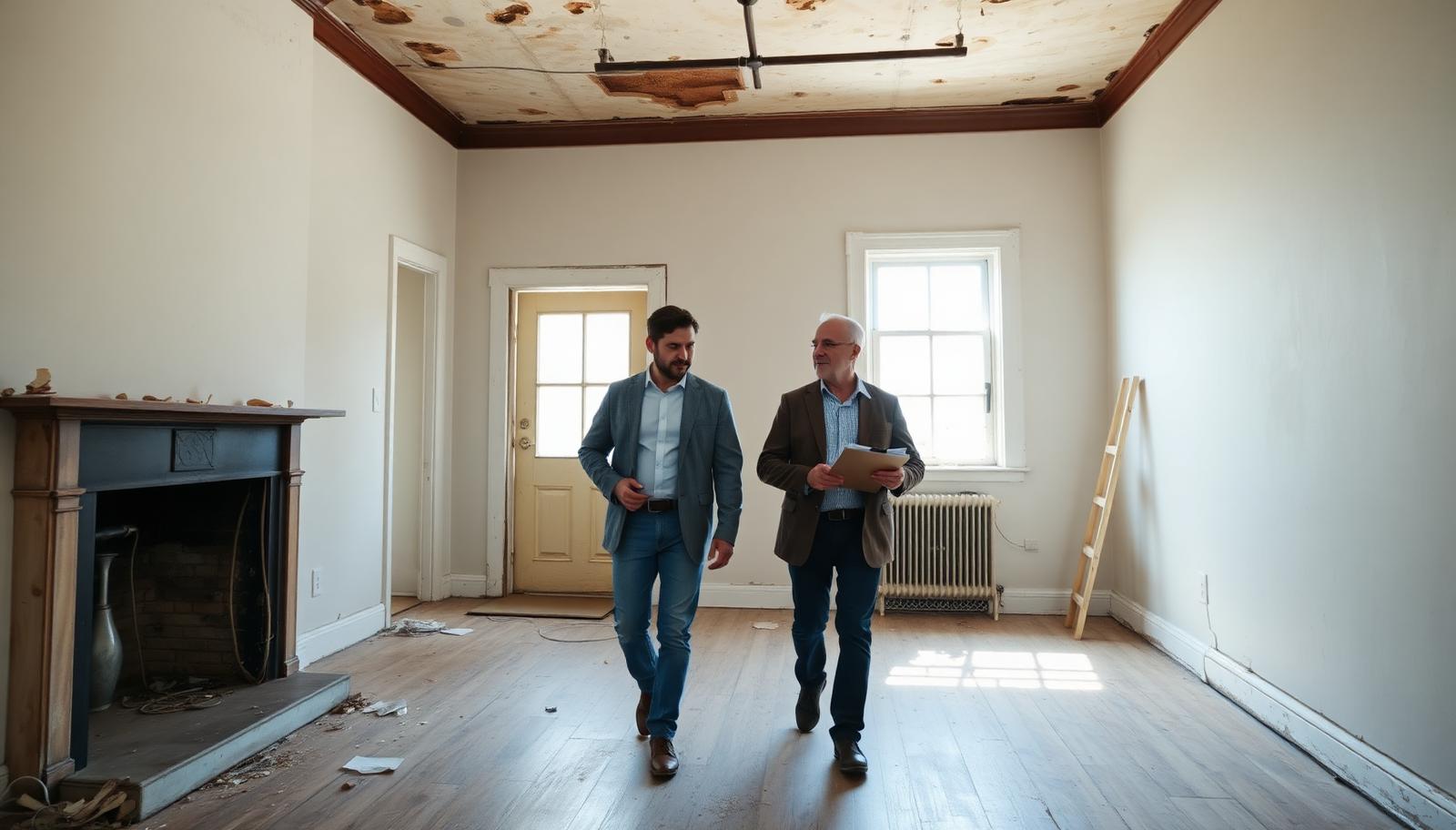
Negotiate a real inspection period into your assignment agreement if at all possible, even a short one — it's your legitimate exit if the property doesn't match what was represented. Use it to physically walk the property, or send someone qualified to walk it for you, and check:
- Roof age and visible condition, and any interior staining that suggests past leaks.
- Foundation — cracks, uneven floors, doors that don't close square.
- Electrical panel age, capacity, and any obvious knob-and-tube or aluminum wiring.
- Plumbing — visible pipe material, water pressure, and any sewer scope if the age or symptoms warrant it.
- HVAC age and whether it's functional at all.
- Windows, siding, and any signs of pest or moisture damage.
- Overall square footage and layout against what was represented — measure if it seems off.
When to walk away
Walk away when the wholesaler won't let you verify their numbers, the title comes back with unresolved liens they can't explain, the comparable sales don't support the claimed ARV, the repair scope grows materially once you see the property in person, or you're being pressured to sign or wire earnest money before you've had time to run your own underwriting. A deal that only works under pressure and unverified numbers usually isn't a deal — it's a liability with good marketing.
Questions investors ask most
Is it legal to assign a wholesale contract?
Generally yes, as long as the original purchase contract allows assignment and you comply with your state's rules — some states have specific disclosure or licensing requirements around wholesaling and assignment fees, so check local regulations or consult an attorney before you scale this activity.
How much markup is normal on a wholesale deal?
It varies widely by market and deal size, and there's no fixed industry standard. Focus less on whether the fee itself seems fair and more on whether the total price — purchase price plus assignment fee — still leaves you a margin once your own verified ARV and repair numbers are in place.
Can a wholesaler back out after I've signed?
It depends on the underlying contract with the seller and the assignment agreement's terms. If the wholesaler's own contract with the seller falls through, your assignment typically falls through with it — another reason to confirm the underlying contract is real and enforceable before you commit.
Should I ever buy a deal I haven't personally walked?
Only with real caution — photos and a wholesaler's description miss things routinely, from smells that signal mold to structural issues that don't photograph well. If you can't walk it yourself, use a trusted local contractor or inspector as your eyes before you sign.
Building a repeatable vetting process
The investors who do well with wholesale deals treat every one the same way regardless of how good the pitch sounds: verify ARV from closed comps, price repairs by system with contingency, confirm title and assignability, and walk the property before earnest money moves. None of it takes long once it's a habit, and it's the difference between a wholesale deal that performs and one that becomes a lesson.
If you're building your buy box and want a steady flow of vetted, underwritten deals instead of cold outreach, see how to get on a serious cash buyers list or visit our investors page to join the Loyal Property Partners buyers list directly — no fee, no obligation, and every deal comes with comps and repair estimates so you can vet it fast.
Want a Straight Answer on Your Property?
Tell us about the house and we'll walk you through your options — no fees, no repairs, and no obligation to accept anything.
More Guides on Selling a House Fast for Cash
 Cash Offer vs. Listing With an AgentA line-by-line comparison of a cash offer and a traditional agent listing — commissions, repairs, holding costs, and tim…
 How to Sell an Inherited HouseWhat heirs need to know before selling an inherited property: probate basics, stepped-up cost basis, clearing out belong…
 How Investors Find Off-Market PropertiesThe real sourcing channels behind off-market deals — wholesalers, direct mail, driving for dollars, probate and code-vio…